
The body needs to break food into parts so that nutrients can be absorbed and used for energy, growth and normal body functions. When digestion is not comfortable people may feel bloating, gas, heaviness, irregular bowel movements or acidity. Ayurveda has traditionally focused on maintaining balance through food choices, routines, lifestyle practices and herbs. Many ayurvedic herbs for digestion are traditionally used to support digestion and healthy digestive function.
However, herbs are not a replacement for diagnosis or medical treatment when persistent digestive symptoms are present. This guide explains the digestion process, the role of the system commonly used herbs for digestion and practical Ayurvedic habits that may support digestive wellness.
What Do You Mean by Digestion?
Digestion is the process through which the body breaks food and drinks into parts that can be absorbed and used. Carbohydrates, proteins and fats are broken down into molecules during digestion.
The digestive system includes the tract well as organs such as the liver, pancreas and gallbladder. The gastrointestinal tract includes the mouth, esophagus, stomach, small intestine, large intestine, rectum and anus.
In terms digestion involves:
- Chewing food
- Mixing food with fluids
- Breaking nutrients into smaller parts
- Moving food through the tract
- Absorbing nutrients and water
- Eliminating waste
Ayurveda traditionally places importance on digestion and appropriate food habits. Modern digestive science meanwhile explains digestion through the actions of organs, digestive juices, enzymes, nerves, hormones and the gut microbiome.
Understanding the Food Digestion Process
The food digestion process starts in the mouth. Chewing physically breaks food into pieces while saliva begins the digestion of starches. After swallowing food travels through the esophagus toward the stomach. The stomach mixes food with juices. Helps break down proteins.
The digested material then moves into the intestine. Most nutrient absorption takes place in the intestine. Digestive juices from the pancreas and intestine along with bile from the liver help complete the breakdown of carbohydrates, proteins and fats.
The large intestine absorbs water. Helps turn remaining waste into stool. This is why digestion and absorption are closely connected. Breaking food down is one part of the process; nutrients also need to be absorbed and transported for the body to use them.
Where Does Digestion Occur?
Digestion occurs throughout parts of the tract rather than in only one organ.
- Mouth
Digestion begins when you chew food. Saliva mixes with food. Starts breaking down starches.
- Esophagus
The esophagus mainly transports swallowed food to the stomach through contractions called peristalsis.
- Stomach
The stomach mixes food with stomach acid and digestive enzymes. It plays a role in breaking down proteins. Gradually releases the resulting mixture into the small intestine.
- Intestine
The small intestine is a site of digestion and nutrient absorption. Digestive juices and bile help break food down further.
- Large Intestine
The large intestine absorbs water and processes remaining waste before elimination. Therefore, when people ask where does digestion occur the answer is: digestion occurs across the tract beginning in the mouth and continuing through the stomach and small intestine.
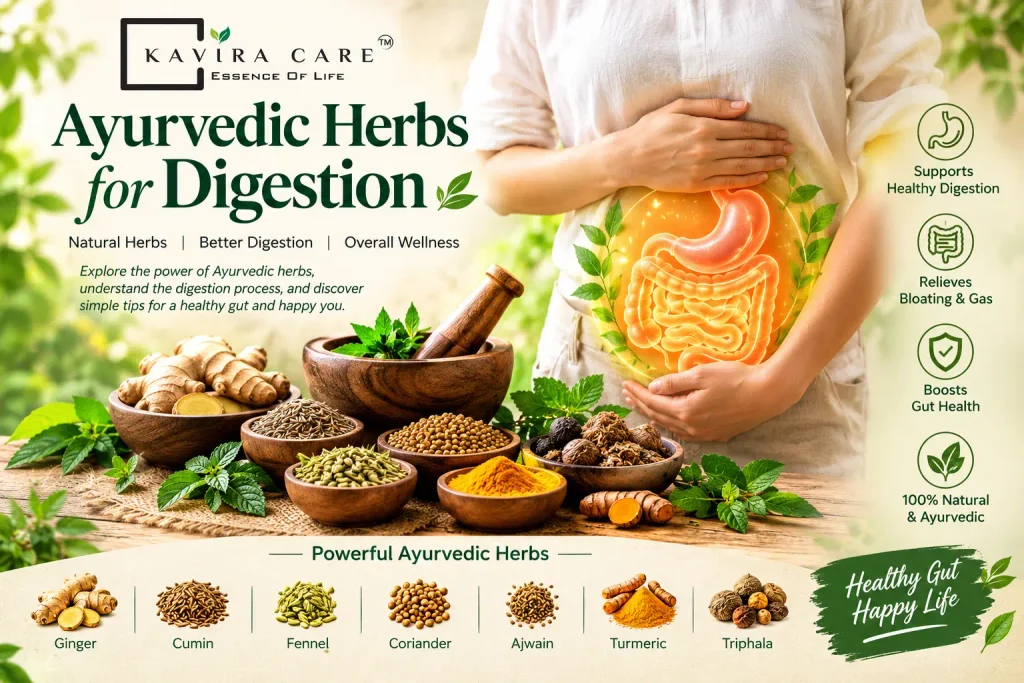
Ayurvedic Herbs for Digestion
Ayurveda has traditionally used herbs and spices as part of wellness. Their traditional uses do not automatically mean that they can treat a diagnosed disease. Research evidence varies between herbs and preparations.
Here are some used herbs for digestion.
1. Ginger
Ginger is one of the herbs used traditionally for digestive comfort. It is commonly consumed as ginger, dried powder, tea or as part of food. Ginger is traditionally associated with supporting digestion. May be included in meals or beverages.
A simple ginger infusion is one-way people incorporate it into their routine. If you have a condition take medicines. Experience frequent digestive symptoms discuss regular medicinal use of ginger with a qualified healthcare professional.
2. Cumin
Cumin commonly known as jeera is widely used in cooking and traditional wellness practices. It can be incorporated into meals, soups or simple digestive beverages.
The Ministry of AYUSH has included cumin and other herbs such as ginger, coriander and tulsi in guidance for public-health contexts. As a food spice cumin can be a way to include digestive ingredients in a balanced diet.
3. Fennel
Fennel seeds or saunf are traditionally consumed after meals in households. It is commonly associated with comfort. Is often used as a simple post-meal mouth freshener. It can also be used to prepare an infusion. However individual tolerance can vary excessive consumption is not necessary simply because an herb is traditionally used for digestion.
4. Coriander
Coriander is another used herb. Both fresh coriander leaves and coriander seeds are used in food traditions. Coriander can be included in meals, chutneys, soups and herbal preparations. Its culinary use makes it a practical ingredient for people in approaches to digestive wellness.
5. Ajwain
Ajwain or carom seeds is traditionally used in households after heavy meals. It is commonly included in preparations for comfort. Because concentrated preparations can be stronger than amounts people should avoid assuming that more is better.
6. Triphala
Triphala is a formulation made from three fruits. It is commonly discussed in Ayurveda in relation to digestive and bowel wellness. Because Triphala is a concentrated formulation than simply a food spice regular use should be approached more carefully.
People who are pregnant taking medicines managing a condition or experiencing bowel problems should consult an appropriate healthcare professional before using it.
7. Turmeric
Turmeric has a history of traditional use in India. It contains curcuminoids, which have been studied for effects. Turmeric can be used as part of cooking. However concentrated curcumin supplements are different from turmeric and their effects, doses, interactions and safety considerations can differ.
Process of Digestion in Stomach
The process of digestion in stomach involves both chemical activities. When food reaches the stomach, Stomach muscles mix it with juices. Stomach acid and digestive enzymes help break down food, proteins. The stomach then gradually moves the digested material into the intestine.
This means that the stomach is important. It is not the digestive system. The small intestine continues digestion. Performs nutrient absorption. Understanding this helps explain why supporting digestion involves more than focusing on the stomach.
Common Reasons for Digestive Discomfort
Digestive discomfort can have many possible causes. Eating quickly low dietary fiber, insufficient physical activity changes in routine certain foods, stress and inadequate fluid intake may contribute to digestive complaints in some people.
A digestion problem can also be associated with an underlying condition. Persistent symptoms should therefore not automatically be attributed to a system or treated only with herbs.
Common symptoms people may notice include:
- Bloating
- Gas
- Feeling
- Irregular bowel movements
- Constipation
- Occasional acidity or heartburn
- Abdominal discomfort
If symptoms are frequent, severe, worsening or associated with unexplained weight loss, blood in stool persistent vomiting, difficulty swallowing, fever or significant abdominal pain professional medical evaluation is important.
How to Improve Digestion as Per Ayurveda?
Ayurvedic approaches to digestive wellness generally emphasize foods, mindful eating and balanced lifestyle habits.
Some practical habits include:
- Eat Mindfully
Eat Avoid rushing through meals. Chew food properly. Pay attention to hunger and fullness.
- Prefer Balanced Meals
Prefer Balanced Meals Build meals around a combination of vegetables, whole grains, appropriate protein sources, healthy fats and other foods that suit your needs.
- Include Culinary Herbs
Ginger, cumin, coriander, fennel and other traditional herbs can be incorporated into cooking.
- Maintain Regular Meal Timing
A consistent eating routine may make it easier to establish habits.
- Stay Physically Active
Regular movement supports health and normal bowel function.
- Drink Enough Fluids
Adequate hydration is important for health. Can be particularly relevant to normal bowel movements.
- Manage Stress
Ayurvedic Herbs for Digestion and Daily Wellness
The goal of using herbs for digestion should not be to hide symptoms. Instead, herbs can be considered as one part of a broader wellness routine. For use culinary herbs and spices may be the starting point.
Concentrated supplements require consideration because the dose, extract strength, ingredients, interactions and product quality can vary. When choosing an Ayurvedic or herbal supplement check the ingredient list, serving size, manufacturer information, quality standards and appropriate usage instructions.
WHO emphasizes the importance of safety, quality, appropriate practice and qualified practitioners in Ayurveda. It is also important to remember that “natural” does not automatically mean “risk-free.” NCCIH notes that some Ayurvedic preparations have contained metals and herbal supplements can also have safety and interaction concerns.
Digestion in Human Step-by-Step
The digestion process, in body can be summarized as follows:
- Step 1 – Eating: Food enters the mouth.
- Step 2 – Chewing: Teeth break food into pieces while saliva begins digestion.
- Step 3 – Swallowing: Food moves through the esophagus.
- Step 4 – Stomach digestion: The stomach mixes food with digestive enzymes.
- Step 5 – intestine: Digestion continues with intestinal juices and bile.
- Step 6 – Absorption: The small intestine absorbs nutrients into the body.
- Step 7 – intestine: Water is absorbed and Remaining material becomes stool.
- Step 8 – Elimination: Waste leaves the body through a bowel movement.
The exact digestion process time varies according to the food, meal size, individual physiology and other factors. There is no digestion time that applies equally to every person.
Can Ayurveda “Clean” the Gut?
The phrase “gut cleansing” is widely used online. The digestive system does not normally require commercial detox products to remove waste. The body naturally. Eliminates waste through the system and other organs.
Of relying on cleanses focus on adequate fiber, fluids, nutritious foods, physical activity, sleep and regular bowel habits. Ayurvedic herbs may be part of a wellness routine. They should not be promoted as a guaranteed detoxification treatment.
Conclusion
Good digestion depends on things. What you eat how you eat, movement, hydration, sleep, stress levels and your overall health. Ayurvedic herbs for digestion can be helpful when used as part of a wellness plan. Ginger, cumin, fennel, coriander, ajwain, turmeric and Triphala are among the used Ayurvedic ingredients for digestion.
These herbs are not cures. Persistent digestive problems need attention. A better way is to focus on meals eating slowly staying active drinking water sleeping well and using traditional herbs in sensible amounts.
When picking a supplement look for ingredient lists, reliable dosing, good manufacturing standards and advice, from professionals when needed.
FAQs
1. Which herbs improve digestion?
Herbs commonly used in Ayurveda to support digestion include ginger, cumin, fennel, coriander, ajwain, turmeric and Triphala. Each herb has its use but the scientific evidence, for their effectiveness varies.
2. What is the best herb for digestive issues?
There isn’t one herb that works best for all issues. Ginger, cumin, fennel and others are often used for digestion. The right choice depends on the symptoms and the person’s overall health condition.
3. How to improve digestion as per Ayurveda?
Ayurveda suggests eating, choosing foods following a regular daily routine using culinary herbs getting enough rest staying physically active and managing stress. If symptoms last, it’s important to see a healthcare professional.
4. How to clean gut according to Ayurveda?
Of cleanses focus on a balanced diet drinking enough water consuming fiber staying active and maintaining regular bowel habits. Any deep cleansing method from Ayurveda should only be done under the supervision of a trained professional.
5. What is Ayurvedic medicine for digestion?
The term ” medicine for digestion” can refer to herbal products or traditional formulations. There is no one product that fits everyone. The right choice depends on ingredients, dosage, health conditions, medications and advice from an expert.
6. What is Ayurvedic medicine for digestion and gas?
Herbs like ginger, ajwain, cumin and fennel are often used in Ayurveda to help ease gas and support digestion. Frequent or severe gas may have causes and should not always be treated with herbal remedies.
7. What is Ayurvedic medicine for digestion and acidity?
Some herbs are traditionally used to support digestion. Persistent heartburn or acidity might point to issues. It’s important to consult a doctor than relying on an Ayurvedic product.
8. What is Ayurvedic medicine for digestion and constipation?
Ayurveda traditionally uses Triphala and certain dietary practices to support bowel health. However, constipation can have different causes, so consult a doctor if it persists or keeps coming back.
9. What is Ayurvedic medicine for digestion problem?
There is no medicine for every digestion problem. The correct treatment depends on the type and cause of the symptom. A qualified Ayurvedic practitioner or medical professional can guide the approach.
10. What is Ayurvedic medicine for digestion improvement?
Traditional options include ginger, cumin, fennel and coriander along with lifestyle and dietary changes. Digestive improvement should be part of a routine, not just based on one herb.
11. What is digestion and absorption?
Digestion breaks food into pieces while absorption moves nutrients from the system into the body. Most nutrient absorption happens in the intestine.
12. What is a digestion problem?
A digestion problem refers to any issue affecting digestion. Symptoms like bloating, gas, constipation, stomach discomfort, acid reflux or changes in bowel habits can have causes.
13. What is the digestive system?
The digestive system includes the tract and organs like the liver, pancreas and gallbladder. These work together to digest food absorb nutrients and remove waste.
14. What is digestion in human body?
Digestion in the human body means breaking down food into parts through physical and chemical processes so the body can absorb and use nutrients.
15. What is the digestion process in human body step by step?
The process starts in the mouth then moves through the esophagus into the stomach then the small intestine, followed by the intestine, rectum and finally the anus. Digestion begins in the mouth continues in the stomach and small intestine while the large intestine mainly absorbs water and forms waste.
16. How does the digestion process in human body work?
Food moves through the tract via muscle contractions. Digestive juices and enzymes break nutrients into forms. Most nutrients are absorbed in the intestine.
17. How long does the digestion process take?
There is no time for digestion. It varies depending on the type and amount of food eaten as individual differences such as metabolism and health.
18. Can Ayurvedic herbs support digestion?
Yes, People have traditionally used herbs like ginger, cumin, fennel, coriander, and ajwain to support digestion. Their effects can vary, so use them carefully and responsibly.
19. Are ayurvedic herbs safe for everyone?
No. An herb’s safety depends on the herb itself, how you prepare it, the dose you take, the quality of the product, your health condition, and any other medications you use. Some Ayurvedic products have raised concerns, including contamination with metals.
20. When should I see a doctor for a digestion problem?
See a doctor if digestive symptoms are ongoing severe recurring or getting worse. Also seek help if you notice blood in stool unexplained weight loss, persistent vomiting, difficulty swallowing, fever or intense abdominal pain.