
Introduction
Millions of people worldwide are searching for natural ways to decrease stress and anxiety, to have a better night’s sleep, and to have more energy. That natural remedy is Withania somnifera, also known as Ashwagandha or Indian Ginseng. While Ashwagandha is not a true ginseng, it has similar properties that make it one of nature’s premier stress relievers.
For thousands of years, this herb has been used in traditional Indian healing practices, and in recent years it has become a staple in many wellness communities around the world. Today, we will explore the uses of Ashwagandha and how it can benefit your body in a variety of ways. With 3,000+ years of Ayurvedic practice and a mountain of scientific research, it’s high time we took a look into the world of Indian Ginseng and how this amazing root can be used to maximize your health.
The “Ultimate Guide to Indian Ginseng: Nature’s Premier Stress Reliever,” is your comprehensive source for learning about how this incredible root works, its amazing benefits, and the proper ways in which to use it for your own health and wellness.
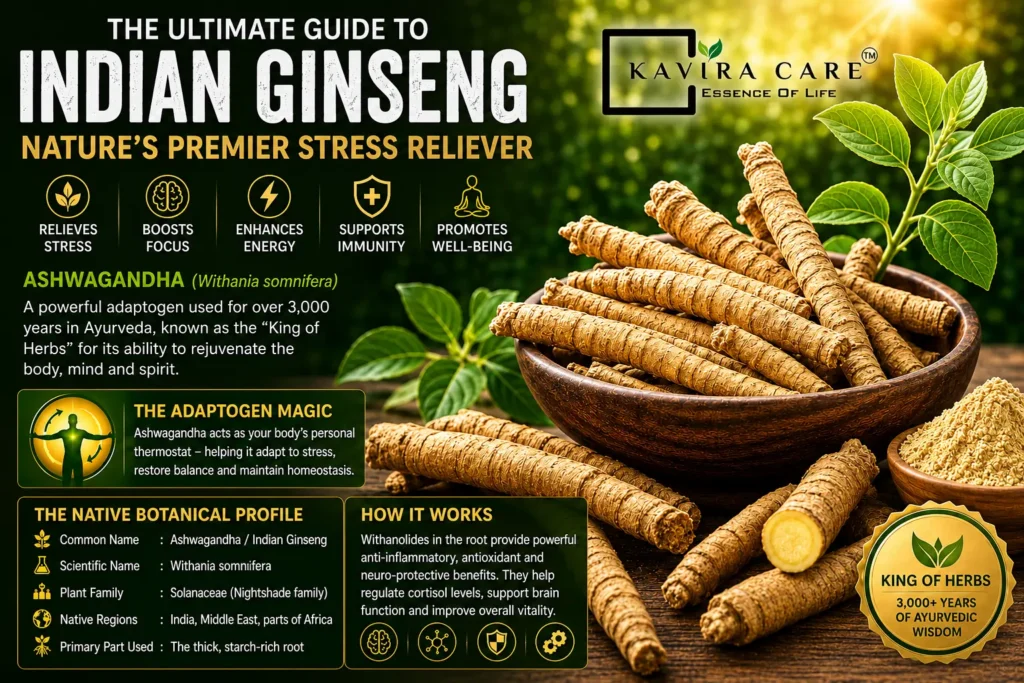
What Exactly is Indian Ginseng?
For over 3,000 years, this herb has been used in traditional Indian healing practices and is regarded as the “King of Herbs”. In the traditional Indian system of healing known as Ayurveda, this herb is classified as a Rasayana, which are a group of special herbs that provide a host of benefits and have the effect of rejuvenating the body to provide a feeling of youth and vitality, to promote long life and to increase mental power.
The name of this herb comes from the fact that raw Ashwagandha Root smells like a horse, (Horse and Smell) and as for its powers it is said to give one the strength of a horse and the boundless energy that this wonderful creature possesses. This incredible herb is also known to cure many health problems and has been shown to improve concentration and to promote excellent health and longevity. Ashwagandha grows as a hardy little perennial herb (shrub like) that is small in stature with yellow flowers and red berries.
[ The Native Botanical Profile ]
Common Name: —— Ashwagandha / Indian Ginseng
Scientific Name: — Withania somnifera
Plant Family: —— Solanaceae (Nightshade family)
Native Regions: —- India, Middle East, parts of Africa
Primary Part Used: – The thick, starch-rich root
There are several different species within the Withania genus but the most commonly used and studied species for medicinal uses is Withania somnifera, or Indian Ginseng. As mentioned previously, the Withania genus is within the same large family of plants as the Tomatoes and Potatoes, (Solanaceae), and it is in the roots of this herb where the majority of the Withanolides (biologically active compounds) reside.
How It Works: The Fascinating Science Behind the Root
The root has an impressive array of powerful plant chemicals known as withanolides – withaferin A and withanolide D being the most significant. These chemicals form a defensive shield around the cells, providing impressive levels of anti-inflammatory, antioxidant and neuro-protective activity.
The Adaptogen Magic
1. This root is a premier adaptogen.
It is referred to as a personal thermostat for your body’s internal stress. While an air conditioner is used to cool air in your home and heat when needed, an adaptogen is used by the body to adjust stress, whether environmental, physical or mental to restore balance and maximize physical and mental well-being. Think of an adaptogen as your body’s personal thermostat.
Just as a thermostat is set to keep a room at a constant temperature and can turn the heat up or down to achieve that end, adaptogens work to turn your physical, emotional or mental processes up or down to deal with stress as it occurs. The broad term “adaptor” has been used to describe Ashwagandha because it helps the body to deal with stress in many different ways.
The net result is that the root of the Ashwagandha plant acts to help your body maintain its natural balance or homeostasis in the face of environmental, physical or mental stress. Because Indian ginseng is an adaptogen, it does not drive your body in any one direction. For example, when your room gets too cold, your thermostat turns up the heat, and when it is too warm, it turns down the heat. In like manner, this root enables your body to meet any demands thrown its way.
2. As stress increases
The brain sends signals to the adrenal glands to send out massive amounts of cortisol into the blood stream. For short periods of time cortisol can actually be healthy for you because it helps you cope with stress in “fight or flight” ordeals. Chronic or extreme amounts of cortisol in the blood, however, will cause your body serious problems, including putting on large amounts of weight, increasing your risk of a plethora of diseases, reduce your immune system and give you excessive fatigue. This is because your body’s thermostat is amped up and can’t dial back down normally.
The withanolides found in this root have also been shown to interact with the hypothalamic-pituitary-adrenal (HPA) axis in the body. This has been proven in many human trials that have found that using Ashwagandha can lower morning cortisol levels, putting the body and brain into a state of relaxation, improving mood and enabling the individual to function more clearly and breathe more freely.
Science-Backed Benefits of Indian Ginseng
In summary, here are the Science-Backed Benefits of Indian Ginseng. These health benefits were found through high-quality, randomized controlled human trials.
1. Slashing Stress and Anxiety
Emotional Wellbeing – Stress & Anxiety Relief – The number one reason that people use Indian Ginseng is for relief of stress and anxiety. A number of quality human trials have found that participants who took standardized extract of this herb reported significant decreases in stress and feelings of anxiety when compared to those participants who took a placebo. This decrease in stress and anxiety was reflected in the levels of cortisol found in the blood of trial participants.
2. Deep, Restorative Sleep
If you are one of the many people that suffer from insomnia and lack of quality sleep then this herb is definitely worth giving a try!
The species name of this herb, somnifera, translates in Latin to sleep-inducing! In terms of helping one to fall asleep, somnifera acts via the GABA system. It is believed that this herb increases the activity of GABA, which is the brain’s ‘calming’ neurotransmitter that tells the nervous system it is time to go to sleep and unwind. Studies have found that polysomnography (a method for recording and analyzing various physical activities as they occur during sleep) showed individuals who took the herb went to sleep faster, woke up less during the night and had a greater amount of time spent in the deep sleep phase of the night.
3. Boosting Athletic Performance, Strength, and Muscle Recovery
For those who need to perform at a high level and cannot afford to be fatigued, Ashwagandha has been proven to enhance the VO2 max. In a recently published study of endurance athletes who engaged in resistance training and were given a dose of withanolides (the active component of Ashwagandha) daily for 8 weeks, those who took Ashwagandha showed significant gains in muscle mass and a 10% increase in upper and lower body strength, as well as improvements in muscle recovery. These effects are most likely the result of the herb’s powerful anti-inflammatory properties.
4. Balancing Hormones and Enhancing Male Fertility
Somnifera is also studied for its role in sexual health and reproductive functions. In men, stress negatively affects testosterone levels. Cortisol can find its way into the reproductive organs and cause oxidative stress and even damage to the testes. By relieving stress and combating oxidative stress in the reproductive system, research has found that the herb can boost low testosterone, improve sperm count, and increase sperm motility in men suffering from infertility.
5. Sharpening Cognitive Function and Memory
Indian Ginseng has been traditionally used in Ayurvedic practice as a Medhya Rasayana, a brain tonic to enhance intelligence, memory, learning and mental clarity. There are now many clinical studies demonstrating the ability of plant extracts to improve aspects of cognition including attention, working memory, information processing, executive function and memory in general. The roots of Indian Ginseng have been shown to have potent antioxidant activity to protect brain cells from free radical damage and also to stimulate neural transmission and to promote growth of new neurons and synapses in the brain.
How to Take Indian Ginseng: Forms and Dosages
Forms of Ashwagandha Roots & Best Ways to Use Them.
1. Standardized Root Extracts (Capsules)
This is the most recommended form for most people looking to take this herb. When choosing a brand of root extract, look for products that contain clinically validated extracts such as KSM-66 or Sensoril. These products are guaranteed to have a precise amount of active withanolides in every dose, in the form of a root extract that has been tested in human clinical trials.
2. Raw Root Powder
This is the way that the herb is typically consumed in its natural, unprocessed form. As it is consumed in powder form, it has a very strong, earthy taste and smell. People tend to like to consume this herb in a warm milk drink, similar to how hot chocolate is consumed. This root is full of fat-soluble withanolides and so it is best to consume it with some fat such as in warm milk or with ghee.
3. Liquid Tinctures
There are two different ways to use a liquid tincture. One is to place the tincture under the tongue with your tongue and allow it to be absorbed for a few seconds and then swallow. The other is to mix the tincture with water in a glass and then consume it.
[ Recommended Daily Dosages ]
Standardized Root Extract: — 300 mg to 600 mg per day
Raw Root Powder: ———— 3 grams to 6 grams (approx. 1 tsp)
Another reason to take Indian Ginseng as part of an Ayurvedic diet: this herb can be added to warm milk, or even to ghee (clarified butter). For a long time, Indians have been mixing Ashwagandha with milk to make a warm evening beverage. As with any fat-soluble substance, the natural fats in milk and ghee greatly increase the ability of your digestive system to absorb the many withanolides found in the Ashwagandha root.
Potential Side Effects and Safety Guidelines
This botanical is safe for short and medium terms use (up to 3 months) and is 100% natural so it is good to use; however, it must be used with respect for its active pharmaceutical ingredients and for its effects on the body.
Common Mild Side Effects
Starting on this herb and or using too much could create some mild symptoms. Some of these could be stomach issues (nausea, stomach upset, stomach pain), Diarrhea, and loose stools and could put you to sleep during the day because of the sedative like properties that the herb can possess.
- Mild stomach upset or nausea
- Diarrhea or loose stools
- Daytime drowsiness or mild sedation
Critical Safety Warnings
There are certain classes of people who should avoid taking any form of Indian ginseng unless they first get clearance from a doctor:
- Pregnancy and Breastfeeding: There is not enough research regarding the safe use of Withania during pregnancy or breastfeeding. Until more information is available, avoid taking this herb. Preliminary evidence may suggest the possibility of uterine contractions at high dosages and this could be dangerous for the fetus.
- Autoimmune Diseases: People suffering from conditions that affect the immune system, for example, MS, Lupus, or Rheumatoid Arthritis must avoid taking this herb. It is an immunomodulator, and it can either increase or decrease the immune activity. If it increases, then it may worsen the symptoms of autoimmune disorders.
- Thyroid Disorders: As Indian Ginseng can increase the levels of thyroid hormones in the blood, people with hyperthyroidism should avoid consuming this herb. Conversely, individuals with hypothyroidism who are on medication may experience extreme fluctuations in their thyroid hormone levels.
- Use before surgery: Should be stopped at least 2 weeks prior to surgery. Withania slightly depresses the central nervous system; in addition, there is a potential for Anesthetic interaction.
Conclusion
Indian ginseng is a root that exudes maturity and balance. It may not be the answer to every problem, but it is a particularly effective supplement for a variety of maladies related to stress, sleep and energy. In short, for people with average health, Indian ginseng is a great root to consider for improving overall health. Here’s to great health with the root of vitality.
Remember to complement any herbal supplement with a healthy, balanced diet and lifestyle. Including adequate amounts of physical activity, in order to reap optimal benefits. Always approach natural herbal remedies with a sense of informed caution. When in doubt, consult your primary healthcare provider before supplementing your body with anything. Your body will thank you!
FAQs
1. Is Indian ginseng the exact same thing as Ashwagandha?
Yes, people commonly refer to Withania somnifera as Indian ginseng. In traditional Ayurveda, it is known as ashwagandha. The name “Indian ginseng” comes from its adaptogenic properties, which may help support energy, vitality, and the body’s response to stress, making it comparable to Panax ginseng . However, Indian ginseng and Asian ginseng are different plants with distinct active compounds and health benefits. Yet they are two vastly different plants with totally unique bioactive qualities.
2. How long does it take for Indian ginseng to start working?
Notice the differences as your supplement starts to interact in more profound ways to support your health and wellness. For the first few days of taking Withania somnifera (Indian ginseng). Some people find they can feel more calm or relaxing while others find that they are sleeping better. Consistent use of Indian ginseng for four to eight weeks may provide the greatest benefits, including support for healthy cortisol levels, physical strength, and overall well-being.
3. Can I take Indian ginseng every single day, or should I cycle it?
To allow your body to have the greatest benefit of Withania Somnifera. You can take it on a daily basis for as long as three months (as proved by the vast majority of human clinical trials on this herb). Holistically speaking however, it affects your neurochemicals as well as your endocrine system (hormones) so as with many natural plant compounds there is benefit in ‘cycling’ it. For best results take Indian Ginseng daily for 8 to 12 weeks then take a two week break. To allow your body to realign its own natural recovery processes and thus regain the effects.
4. Does Indian ginseng cause liver damage?
Most adults tolerate Withania somnifera (ashwagandha) well when they use it as directed. However, researchers have reported a small number of liver injury cases associated with certain dietary supplements containing Indian ginseng. Although these reports are rare, people with liver disease or those taking medications that affect liver function should consult a healthcare professional before using ashwagandha. But, all of these reports were rare and involved either excessive consumption of the herb, low quality products. That contained heavy metals, or the herb was being taken in conjunction with certain prescription medications. Always purchase Indian ginseng supplements from reputable manufacturers that provide transparent third-party lab testing to assure the highest quality.
5. Can women take Indian ginseng, or is it only for men’s testosterone?
Indian ginseng or Withania somnifera is not exclusively for the men. Who need testosterone as the root of the herb is fantastic for the ladies as well. Providing support to their endocrine system to alleviate and prevent all sorts of anxiety caused by stress. Which brings on symptoms of chronic fatigue as well as relieving symptoms associated with the perimenopause such as feeling of hot flushes and unexplained mood swings which can all occur as the estrogen in the women declines.
6. At what time of day would you take the Indian ginseng supplement to get the greatest benefits?
For someone combating daytime stress, anxiety while at work. Take Indian ginseng root in the morning to support workout performance and daily energy levels. For someone who is lacking sleep, who suffers from poor sleep, take the root before bedtime with a light snack, perhaps hot chocolate.
7. Does Indian ginseng interact badly with prescription medications?
Indian ginseng does interact with a number of pharmaceuticals. There are a few key categories to be aware of: The herb acts as an immunomodulator which means that there is the potential for interaction with a wide variety of medications. Specifically with diabetes medications the root may drive blood sugar down too low. People taking diabetes medications such as Glyburide, Glipizide, or Glimepiride should use ashwagandha with caution and consult their healthcare provider before use.
Patients on blood pressure medications (angiotensin-converting enzyme inhibitors or calcium channel blockers) may require a reduction in dose of the blood pressure medication when using the herb. Likewise, there is potential for interaction with sedatives (i.e. Valium or similar) as well as with thyroid hormone replacements (i.e. Synthroid or Cytomel). As with any supplement, it is always best to consult with a physician and specifically inform him or her of any immunosuppressive drugs that you are taking.
8. Will Indian ginseng make me feel sleepy during the day?
On a normal day, taking a standard dose of Withania somnifera (300mg) won’t make you drowsy throughout the day. It will in fact, calm and focus you enough for you to complete your daily routines. If, however, you do find yourself getting extremely drowsy or relaxed during the day then it would be best to move your daily dose of Indian ginseng to just before bedtime and take the entire dose then.
9. Can Teenagers/Children safely use Indian Ginseng?
The traditional Indian use of ashwagandha root for families across generations does not necessarily translate to the safe use of ashwagandha root extracts for children and teenagers. Due to the lack of good quality long-term studies on the effects of ashwagandha root on the developing endocrine system and hormones of children and teenagers. It is best to limit the use of Indian ginseng supplements to adults. Only under the guidance of a qualified pediatrician and for specific indications, may a pediatrician consider prescribing ashwagandha supplements to children and teenagers.
10. Does Indian ginseng cause weight gain or weight loss.
Although Indian ginseng root can cause weight gain due to increased strength and energy, it in fact also can aid in weight loss. Research suggests that ashwagandha root may help regulate cortisol levels, the body’s primary stress hormone. Chronic stress can increase cortisol production, which may contribute to fat accumulation around the abdominal area over time. Increased cravings for sugary and high-calorie comfort foods, such as junk foods. In this way, Indian ginseng root can help to reduce weight and bring about weight loss in individuals who are higher weight.
11. What is the difference between KSM-66 and Sensoril ashwagandha?
KSM-66® Ashwagandha uses only ashwagandha root extract and follows a traditional water-based extraction process. This root extract provides clean energy, enhanced physical performance during workouts. It has become a popular, modern supplement to support stress relief and overall wellness for adults and children. Sensoril is a patented, high-concentration, root and leaf extract made with a unique process. That can increases the withanolide content of the final supplement. Some manufacturers formulate Sensoril® as a high-concentration ashwagandha extract, and its calming properties may help promote relaxation and support healthy sleep. However, healthcare professionals should guide its use, especially for people with persistent insomnia or those taking sedative medications.
12. Can I take Indian ginseng on an empty stomach?
While it is possible to take this supplement on an empty stomach, it may not be best for you. For individuals with sensitive stomachs, the concentrated roots of the indian ginseng herb or the ashwagandha powder can cause stomachache, nausea or feel of heat in the stomach. It is best to take your supplement with a fat-containing meal to enable best digestion and absorption of the supplement.
13. Does Indian ginseng help with depression?
Multiple studies suggest that Indian ginseng may help reduce stress and anxiety. Clinical research indicates that it may support people experiencing mild to moderate stress and symptoms of generalized anxiety when used as part of a healthy lifestyle. However, Indian ginseng should not replace professional treatment for depression or other mental health conditions. People with depression or other mental health disorders should consult a qualified healthcare or mental health professional before using Indian ginseng. They will determine the best course of action to treat the individual’s specific symptoms of depression.
14. Can one use Indian Ginseng before a scheduled surgery?
No. Although the herb is sedative in nature. Ashwagandha may reduce the effects of certain sedatives while enhancing the effects of others. Particularly those that depress the central nervous system. To be on the safe side, stop using the supplement two or more weeks prior to any scheduled surgery.
15. How do I know if I am purchasing high quality Indian Ginseng?
Look for following parameters
- Root Extract: Is it made from root of ashwagandha?
Most ashwagandha products on the market use leaves and other plant parts, but the root provides most of the research-backed compounds, including withanolides.
- Standardization
Look for % withanolides. Typically, it is between 2% to 5%.
- Independent Lab Testing
Third party testing by reputable organizations like USP, NSF, Consumer Lab etc. To confirm for absence of contaminants like heavy metals, pesticides and fillers.